
Experimenting with Papers in Eco Prints
This is a free tutorial.
It shows one way to use a technique.
If you want deeper guidance and finished projects, start here →Embellished Ecoprints Course
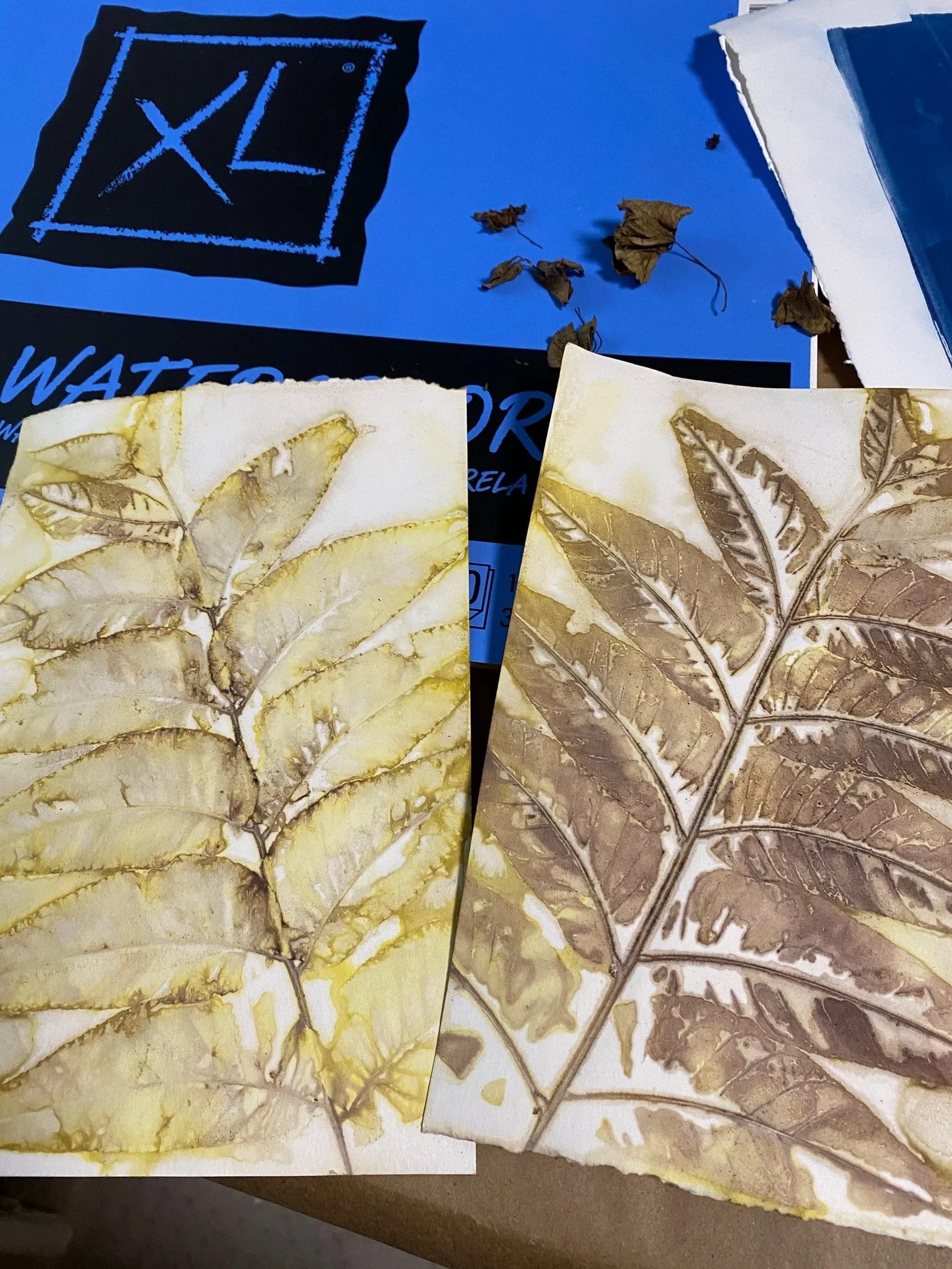
Let go of perfection
Using plants and leaves to make art is both a science and an art. It’s all an experiment when I ecoprint.
The science side comes into play with the choices I make about the type of leaves and plants, the modifiers, and method of heat, moisture and pressure.
The art side calls on my skills in layout and color and the paper I choose.
I’ve been using many different kinds of paper lately as experiments and I want to share the results from those experiments.
Watercolor Paper
I began ecoprinting with watercolor paper. I watched Youtube videos, read books and articles (my favorite botanical printing artists are Jane Dunnewold and Susan Brooks), and joined Facebook groups that talked about eco- or botanical printing. Watercolor paper was the most common type of paper used.
I experimented with the watercolor paper I had on hand and the 140lb 300g/m2 gave me the best results. It’s heavy enough to hold up to the steam but not too stiff. I prefer cold-press paper with a slight texture.
This print is on cold-press watercolor paper with a heavy texture. Notice the texture in the paper.
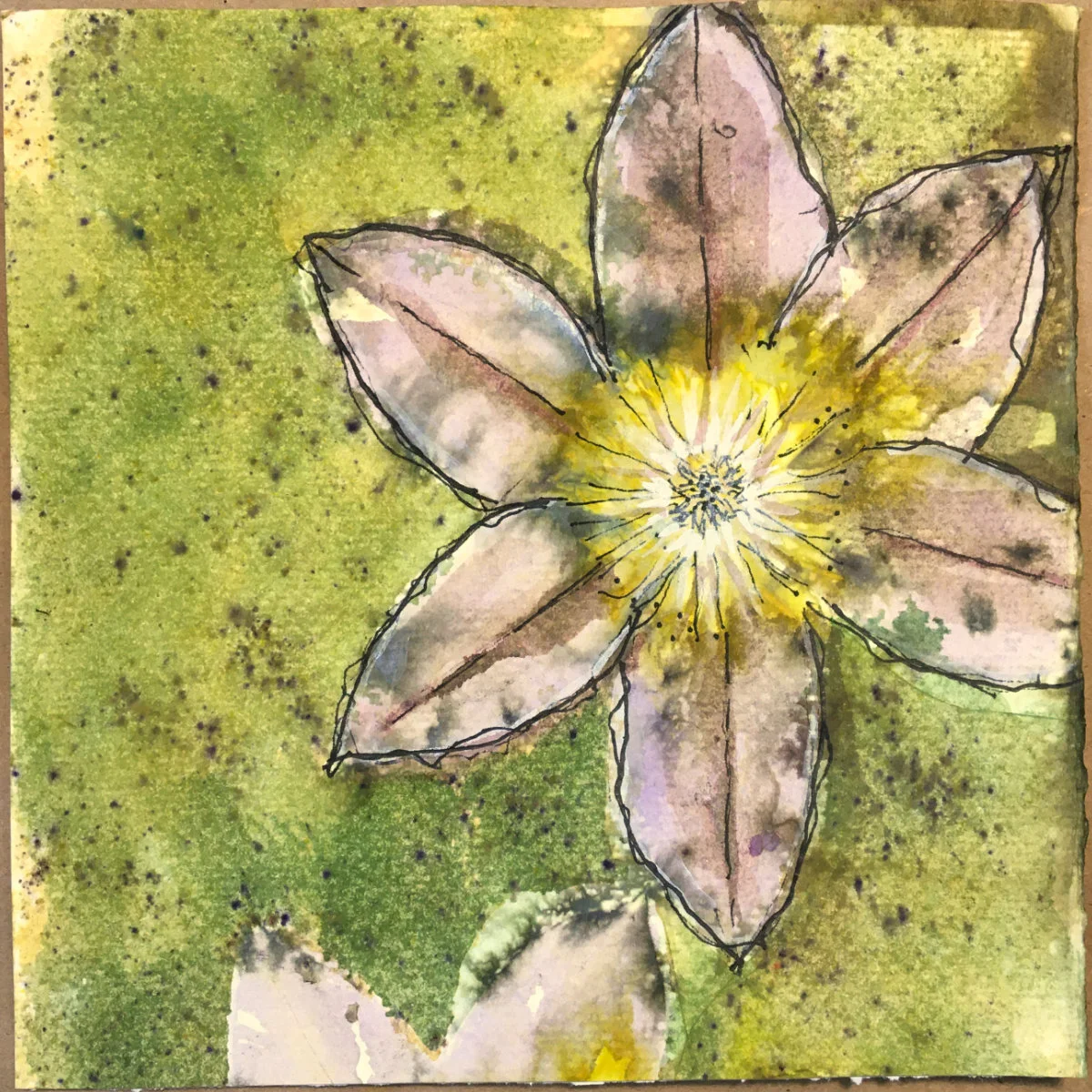
Clematis print on heavy texture cold-press watercolor paper. Enhanced with watercolor and pen
inkjet presentation paper
Matte inkjet presentation paper has a coating that accepts inkjet ink. The paper’s package says it is 64lb 240g/m2.
The best part of using this paper is the detail in the print that it holds. It can’t be soaked like the watercolor paper, but a quick dip in the mordanted water (like vinegar) is enough moisture to capture the imprint of the leaves. Presentation paper is similar to inkjet photo paper but it’s a heavier weight.
I’m going to experiment a lot with this paper.
Inkjet presentation paper - I dipped thin-leaf eucalyptus in “iron water”. The paper was mordanted quickly in alum water.
Printmaking paper
Cheap Joe’s definition of printmaking paper:
“Printmaking Papers are very durable, able to withstand multiple soakings and press runs without falling apart. Used for everything from screen and block printing to etching, lithography, intaglio and more. Printmaking Papers are also a popular choice with drawing and mixed media artists.”
I use different brands of printmaking paper. It’s wonderful to use; soft yet durable. I buy it in 22” x 30” sheets and tear it down to fit the size of print I want.
I frequently get good results using printmaking paper.

American elm leaves on printmaking paper enhanced with watercolor
Various papers
I’ve tried different everyday papers in my ecoprinting journey.
But there is still a lot for me to learn.
I’ve used old book pages and sheet music with less than great results. Since they are thin papers, they didn’t capture the pigment in the leaves the way thicker paper does.
But a different mordant on the paper might bring a different result.

The music page had American elm leaves and the book page had Japanese maple leaves. Neither result was what I was looking for. But I’ll keep experimenting.
Another paper
This paper is card stock. I think it’s for making greeting cards. I tried it and even though it’s lighter weight, it printed well. But the leaf underneath bled through so you can see it and the leaf on the top.
I like the outcome on this experiment. I can use the bleed-through characteristic to my advantage in a project.

American elm leaves on thin cardstock
Results of experimentation
I love the unpredictability of eco-printing. Every attempt at making an ecoprint is part art and part science.
If this sounds like the not-sure-of-the-outcome kind of art you like, please give it a try. If I can answer any questions, please reach out in the comment section.